
A European roulette strategy is not a secret formula for turning every spin into profit. It is a structured way to choose bets, set limits, and decide when to continue or leave. Because the European wheel has one zero and a lower house edge than its American counterpart, careful bankroll management can preserve more room for the inevitable variance. The useful question is not which system promises certainty, but which rules you will follow before the next spin.
What Makes a European Roulette Strategy Work?
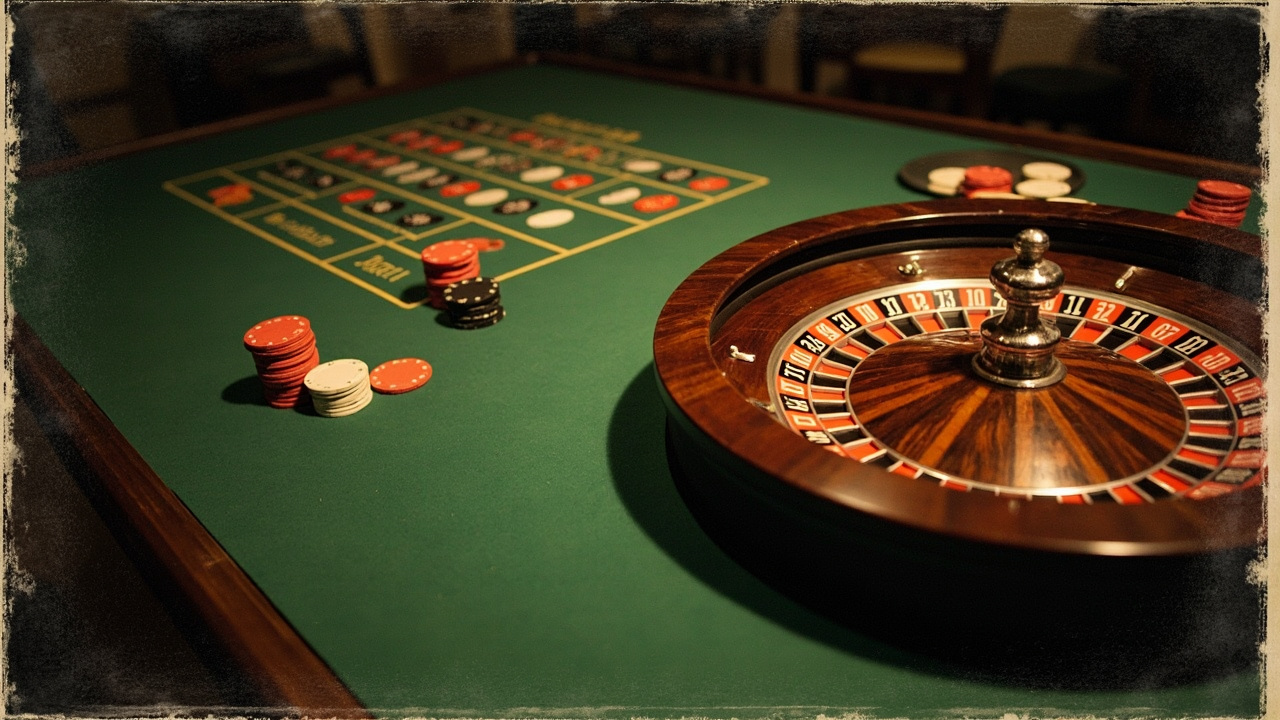
European roulette uses a wheel with 37 pockets: numbers 1-36 plus a single zero. A straight-up bet therefore wins on one outcome, but the zero means the house edge is about 2.7% on standard even-money wagers. That distinction matters. Any credible European roulette strategy begins by accepting that no sequence can remove random variation.
The mechanics are straightforward. A strategy should specify the permitted wager, when to increase it, how long a session lasts, and the exact stopping condition. Without those details, “doubling” or “waiting for a colour” is merely a description of betting, not a strategy. The main advantage of the European layout is not a guaranteed pattern; it is a smaller mathematical disadvantage, typically around one third less than the equivalent edge on a double-zero wheel.
A practical evaluation should ask: Is the bet part of a named system? Are stakes controlled by fixed units rather than feelings? Can the rules be followed even after a loss? If not, the approach is likely to rely on impulse rather than repeatable decisions.
A practical evaluation should also ask whether the strategy has been tested over time and across more roulette variations on this site. The best approach is to set firm loss limits, record every bet, and avoid chasing losses regardless of how often a short-term pattern appears.
Choosing Bets by Risk and Session Limits
Start with the bet type, because it determines both the payout and the probability of surviving the planned sequence. Inside bets offer larger returns but lose more often; outside bets such as red, black, odd, even, and high-low usually pay 1:1. Dozens, columns, and rows sit between these categories, commonly paying 2:1. A European roulette strategy can use any of them, but it should explain why that particular payout suits the session limit.
The next criterion is bankroll sizing. Divide the amount available for the session into equal units, often one to two percent of the total. Each bet should consume one unit, or a clearly stated multiple. This prevents a loss streak from forcing a larger wager designed to “recover” money already lost.
Set three boundaries before playing: the minimum bankroll required, the maximum loss, and the maximum time or number of spins. For example, a player might use a 100-unit bankroll, risk one unit per round, and stop after 50 rounds or 20 units lost. These figures are illustrative, not universal, but the function of the numbers is important. They convert a vague intention into enforceable limits.

A Decision Checklist Before Each Round
A reliable European roulette strategy should be simple enough to apply at the table without calculation errors or emotional reinterpretation. This sequence turns a plan into an operational routine:
- Choose one permitted wager and record the intended stake in units.
- Set the session’s loss limit and maximum number of rounds before beginning.
- Check that the next wager still fits the bankroll and progression rules.
- Place the wager only after confirming the amount and type.
- Evaluate the result without adding unplanned “recovery” bets.
- Stop immediately when either session limit is reached.
- Record the outcome so later decisions follow the plan rather than memory.
This checklist does not predict the next number. It identifies the decision points where discipline matters most. In practice, the biggest error is often changing the wager after a result that the strategy did not anticipate. If the rules permit a progression, its limits should be fixed in advance. If they do not, flat betting is usually easier to audit and control.
Comparing the European Wheel with the American Wheel
The choice of wheel changes the mathematics, although it does not change the random outcome of an individual spin. European roulette has 37 pockets and a house edge of approximately 2.7% on even-money bets. American roulette has 38 pockets because it includes both zero and double zero, raising that edge to about 5.3% on the same wagers.
That difference compounds over repeated play, making the European wheel generally more efficient for a strategy based on even-money wagers. For inside bets, the percentage house edge remains similar, though the European wheel still offers more winning outcomes because it has one fewer pocket. A player comparing layouts can use this roulette europea o americana as a concise reference before deciding where to practise.
When assessing variants, distinguish the underlying bet from promotional rules. Some casinos offer occasional “la partage” or “en prison” rules on even-money wagers under specific zero outcomes, reducing the effective house edge. Check whether the rule applies at the table, whether it affects only certain wagers, and how settlement is handled. Do not assume that a promotional table behaves like every European wheel.
Testing a System Without Chasing Results
A European roulette strategy should be tested on paper before it receives real money. Record the wager, stake, result, and bankroll after every round. Use a long enough sequence to include both wins and losses; a handful of spins cannot reveal the effect of a progression. This is also where unrealistic assumptions become visible. A doubling system can produce attractive short-term results while doubling the stake after each loss, so two losses can consume four units and a longer losing sequence can exceed the bankroll entirely.
Avoid systems that require a decision based on a supposed pattern in previous spins. Independent outcomes do not become predictable merely because a colour or number has appeared repeatedly. A waiting rule may reduce the number of wagers placed, but it does not alter the wheel’s probabilities.
Instead, evaluate the plan with three questions: What is the largest stake permitted? What happens when the maximum stake is reached? Is the stop condition based on money, time, or both? If the answer is unclear, simplify the system. Flat betting is not sophisticated, but it is transparent and easy to enforce.
For broader options, there are more roulette variations on this site that can help players compare layouts and rule sets before committing to a method.
Selecting a European Roulette Strategy You Can Enforce
The strongest European roulette strategy is not the one with the most elaborate progression; it is the one that survives losing stretches. Begin with the smallest bankroll compatible with your unit size, use a bet whose payout matches your risk tolerance, and define the stopping conditions before the first wager. The single-zero wheel provides a modest mathematical advantage over American roulette, but neither layout removes variance.
Treat every session as a test of process rather than a guaranteed income opportunity. If the plan requires chasing, borrowing, or increasing stakes beyond the agreed limit, change it before playing. Sound roulette decisions reduce avoidable mistakes; they do not defeat the house edge.